Last updated: 24 September 2026
TL;DR: Garden leave means telling an employee not to work some or all of their notice period while they remain employed and are paid as usual, including contractual benefits. Practices use it when a vet or nurse is joining a nearby competitor. It works best with a clear contract clause and sensible restrictive covenants, and it does not switch off CPD or holiday rights.
A senior vet hands in her notice. She has three months to work, she is joining a practice four miles away, and half the clients on her list ask for her by name. The question every owner asks next is whether she should be seeing those clients for the next twelve weeks at all.
Garden leave is when an employer tells an employee not to work part or all of their notice period. The employee stays employed until the notice ends, and must be paid as usual, including any contractual benefits. It is typically used to keep someone away from confidential information and client relationships before they join a competitor.
Acas guidance on notice periods describes it in exactly those terms, and notes the employee is still employed even though they are not working. The GOV.UK guidance adds that an employer may instead ask someone to work from home or another location, with the same pay and contractual benefits.
That last option is useful in a practice. A departing vet can sometimes finish clinical notes, handover summaries or CPD records away from the consulting room, without seeing clients.
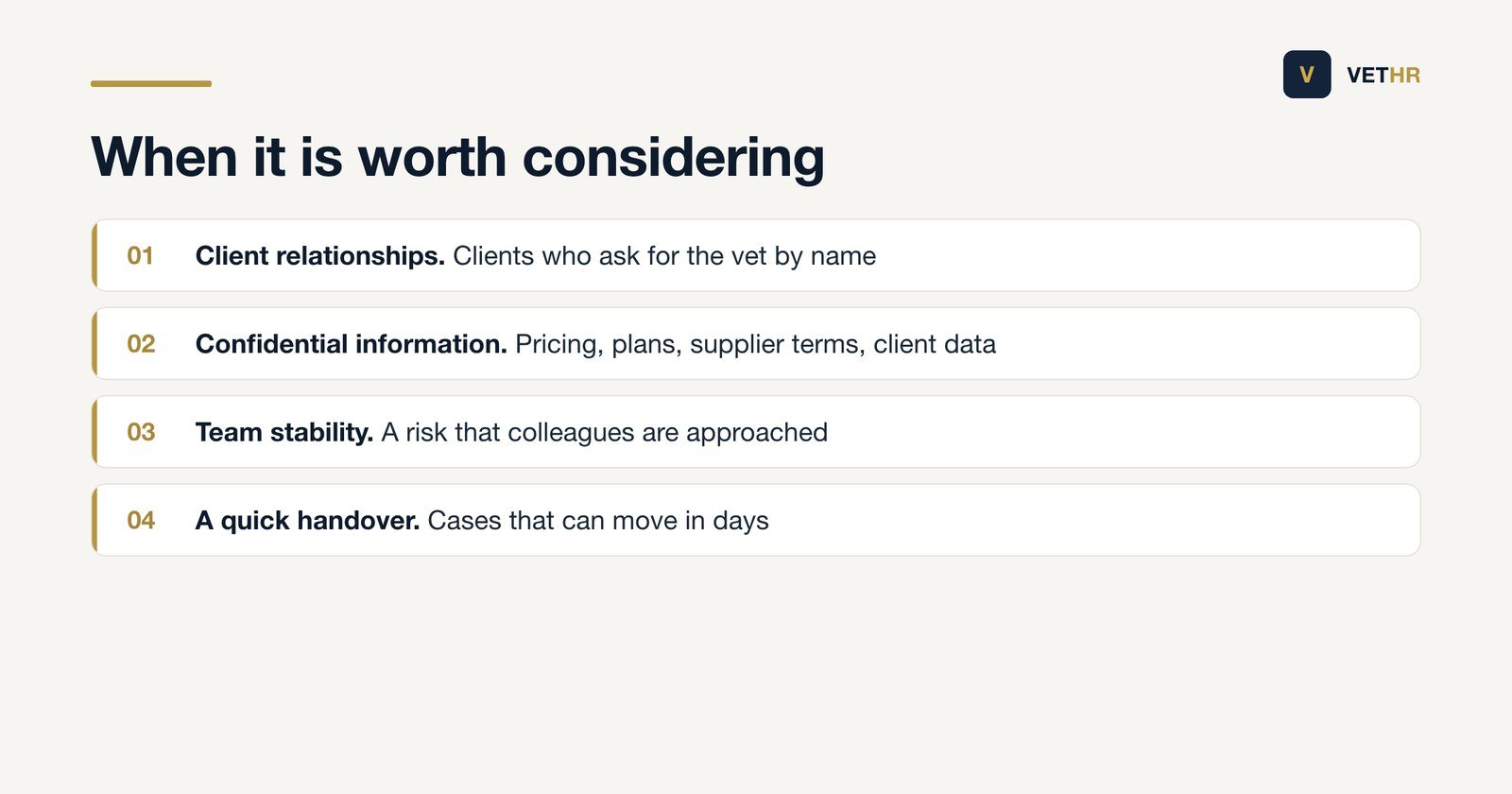
Use garden leave when the risk of someone working their notice outweighs the cost of paying them to stay away. In veterinary practice that usually means a vet or senior nurse with strong personal client relationships, access to pricing and business plans, or influence over colleagues, who is moving to a practice close enough to compete.
It is not always the right call. If the person is leaving on good terms to a practice two counties away, keeping them at home just removes a clinician from a stretched rota, and paid notice with a proper handover is usually better for patients and the team.
Before deciding, have the conversation first. An exit discussion sometimes reveals the move is less settled than the letter suggests, as our guides to the counter offer and exit interviews explain.
A clear clause is the safest basis. It sets out that the practice may require the employee to stay away from work, from clients and from colleagues during notice, and what they may and may not do. Without one, relying on it is less certain, so take advice before using it on an existing contract that is silent.
A good clause for clinical and management roles covers:
The best moment to add the clause is when contracts are issued or reviewed, not when a resignation letter arrives. Our guide to employment contracts for veterinary staff covers the other clauses worth checking at the same time.
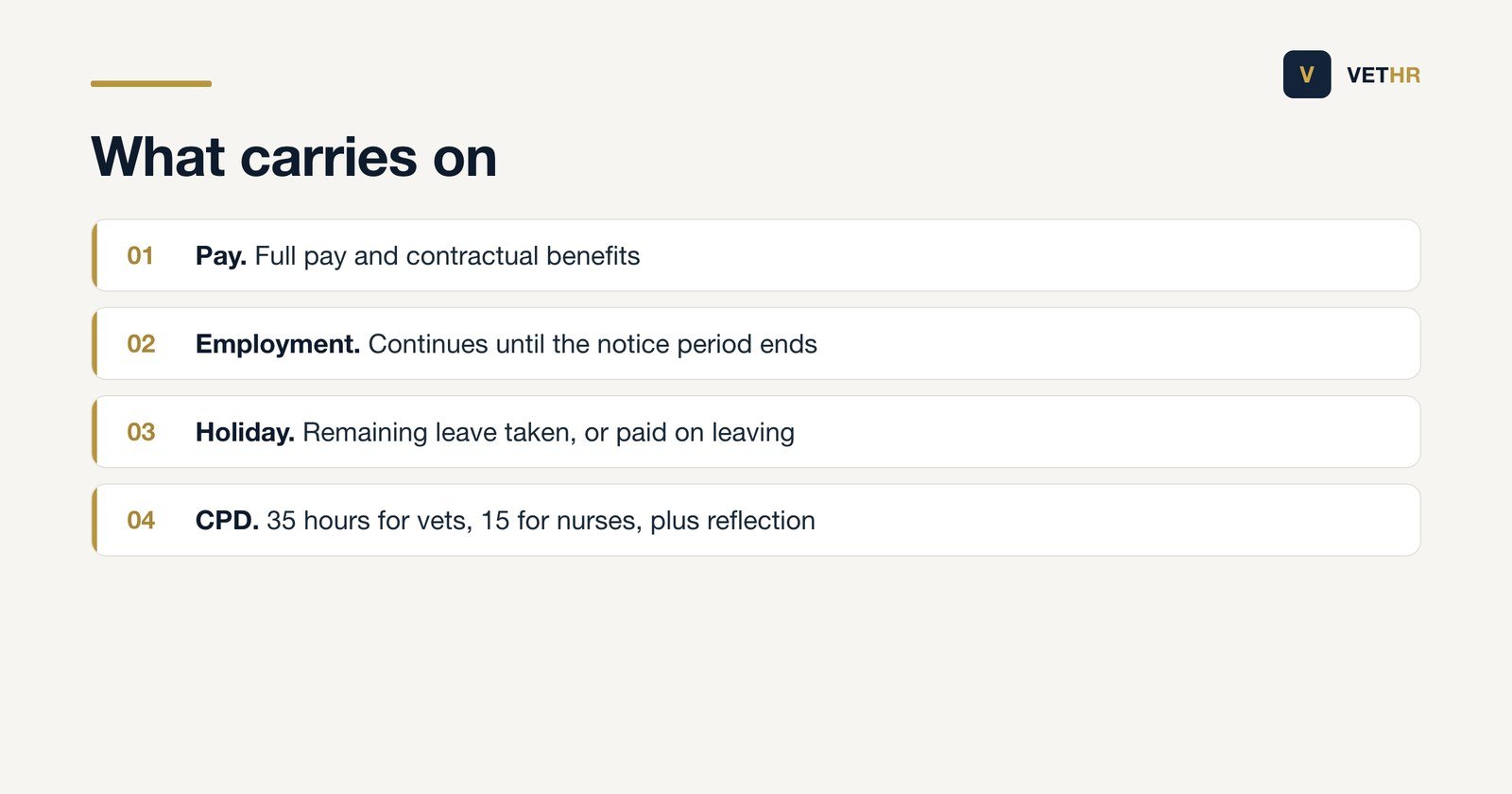
Everything they would get if they were working. Full pay and contractual benefits continue, they remain your employee until the notice period ends, and their holiday and professional obligations carry on. Only the place of work changes. Their terms stay the same, so budget for the full notice period.
The length depends on notice. Contracts often set longer periods for vets, but GOV.UK sets out the statutory minimums: at least one week for employees with one month to two years’ service, one week for each year between two and 12 years, and 12 weeks for 12 years or more. Our guide to notice periods covers the detail.
Holiday needs thought. GOV.UK guidance on holiday when leaving a job says a worker may be able to take remaining statutory leave during their notice period, and that employers must pay for untaken statutory leave when someone leaves.
Professional development does not pause either. The RCVS CPD requirement is 35 hours plus reflection for veterinary surgeons and 15 hours plus reflection for veterinary nurses, whether full or part time, with no carrying over. A long period away from the practice is a sensible time to agree some CPD, as our guide to CPD requirements explains.
They do different jobs. Garden leave keeps someone away during their notice, while they are still employed. Restrictive covenants, such as not soliciting practice clients or poaching colleagues for a set time, apply after the employment ends. Practices that rely on one without the other often find a gap.
How the two interact, and whether a covenant is reasonable in length and scope, depends on the wording and the role, so take advice when relying on both. Our guide to restrictive covenants explains what tends to be proportionate for veterinary roles.
Confidentiality sits underneath both. Client data belongs to the practice, and a clear reminder on their last working day about client lists, contact details and records is simpler than any dispute later.
Senior vet just resigned and joining a practice nearby? A free 30-minute HR health check will help you plan the notice period. Book your HR health check.
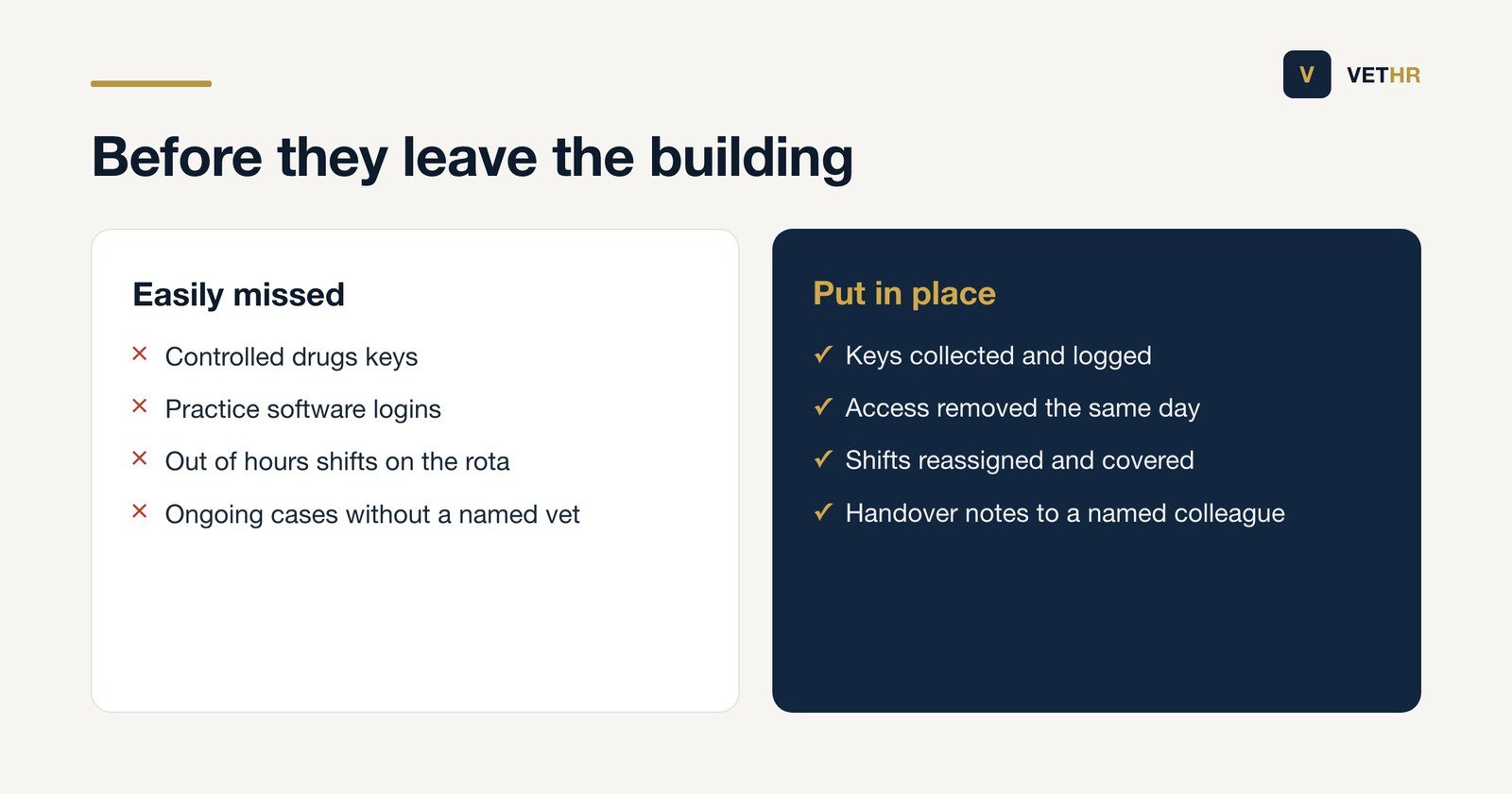
Put it in writing on day one. A short letter should confirm the arrangement, that pay and benefits continue, what the person must not do, and who their contact at the practice is. Then close the practical loops the same day, because the risks in a practice are often physical and digital rather than contractual.
The clinical handover is the step to protect. RCVS guidance on clinical records says relevant clinical information should be provided promptly to any veterinary surgeon taking over responsibility for a case, and a sudden exit at 5pm on a Friday can make that hard.
Tell them the same day, briefly and without detail. Colleagues need to know the person has left the rota, who is picking up their cases and shifts, and what to say when clients ask. They do not need the reasons, the terms, or any view on where the person is going next.
Payment in lieu of notice ends the employment straight away, with full pay for the notice period. Acas says an employer can only insist on it if the contract allows, and cannot force it on an employee otherwise. Because employment ends immediately, any post-employment restrictions start earlier, which is why some practices prefer to keep the employee on notice.
Acas also says that if payment in lieu is not in the contract, the employer can ask the employee to agree to it, must pay the full notice period if they do, and should get legal advice before going ahead. Dismissing someone sooner than their notice allows, without that agreement, risks a breach of contract claim.
Yes. The employee must be paid as usual throughout their notice period, including any contractual benefits, even though they are not working. They remain employed by the practice until the notice period ends.
Not while they are still employed by you. Garden leave is part of the notice period, so the employment and its terms continue until the notice ends. A clear clause saying they must not work for anyone else before then avoids any doubt.
No. RCVS CPD requirements apply whether someone works full or part time: 35 hours plus reflection for vets and 15 hours plus reflection for veterinary nurses, with no carrying over. Agreeing some CPD during a long garden leave helps everyone.
GOV.UK says a worker may be able to take remaining statutory leave during their notice period, and that untaken statutory leave must be paid when they leave. Agree the position in writing at the start of garden leave.
It depends on the risk. Garden leave keeps the person employed and bound by their contract during notice, while payment in lieu ends employment immediately, so restrictions after employment start sooner. Take advice on which suits the situation.
Garden leave is an expensive tool, so use it where the risk is real: close competitors, strong client relationships and sensitive information. When you do, confirm it in writing, close the practical loops the same day and protect the clinical handover.
Our employment contract service can include notice and covenant clauses suited to veterinary roles, and a free HR health check will show whether your current contracts would support one.
The Vet HR Team provides HR consultancy and white-labelled staff systems exclusively to UK veterinary practices. This guide is general information, not legal advice.
Contracts, rotas, holiday, a difficult conversation. Tell us what you are dealing with and we will come back within one working day. Nothing to sign up to.
Got it. We will come back to you within one working day. If you do not see a reply, please check your spam folder.
