Last updated: 23 October 2026
TL;DR: No fit note is needed for absences of 7 days or less; staff self certify instead. A fit note is issued by a range of healthcare professionals, not only a GP, and says either not fit for work or may be fit for work. If it says may be fit for work and you cannot agree the changes, the person is treated as not fit for work.
A nurse hands in a fit note that says she may be fit for work, with amended duties ticked and a note about avoiding heavy lifting for four weeks. The practice manager does not know whether that means she is coming back, staying off, or something in between, and the rota for next week goes out tomorrow. This is the most misread document in practice management.
Not for short absences. GOV.UK states that if employees are off work for 7 days or less, they do not need to give their employer a fit note or other proof of sickness from a healthcare professional.
For those first seven days the person self certifies, normally on a short form when they return. The seven days are calendar days and they include weekends and rest days, so somebody off from Thursday to the following Wednesday has been off seven days.
Asking for a doctor’s note during the first week is a common practice habit and it is both unnecessary and unhelpful. It puts pressure on an appointment system for no benefit and tells your team you do not believe them.
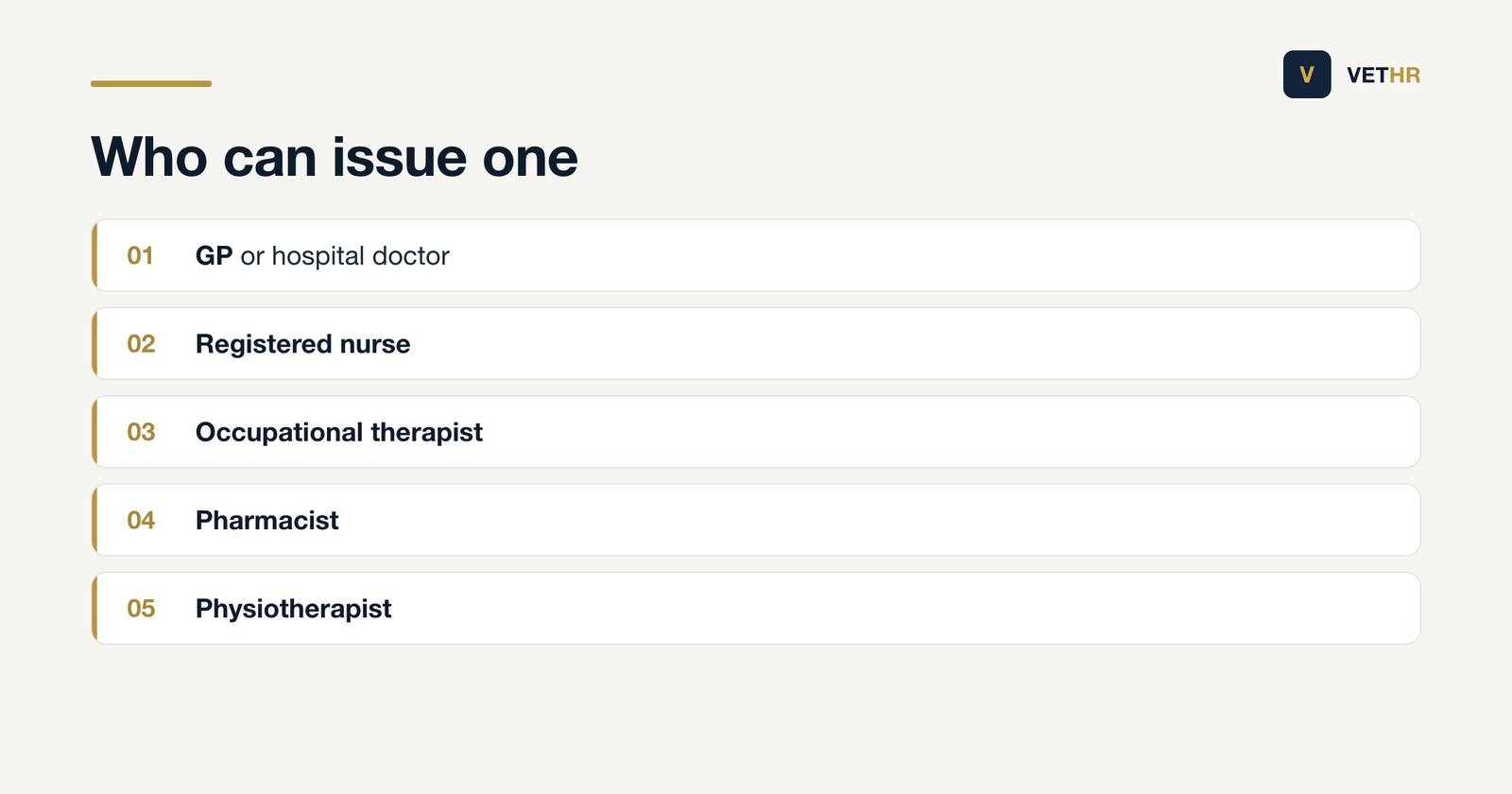
More people than most practices realise. GOV.UK lists the healthcare professionals who can issue one as a GP or hospital doctor, a registered nurse, an occupational therapist, a pharmacist and a physiotherapist.
So a note signed by a physiotherapist for a back injury is as valid as one from a GP, and questioning it because it did not come from a doctor is a mistake worth avoiding.
Fit notes can be issued digitally and do not always carry a wet signature. Check the content rather than the format.
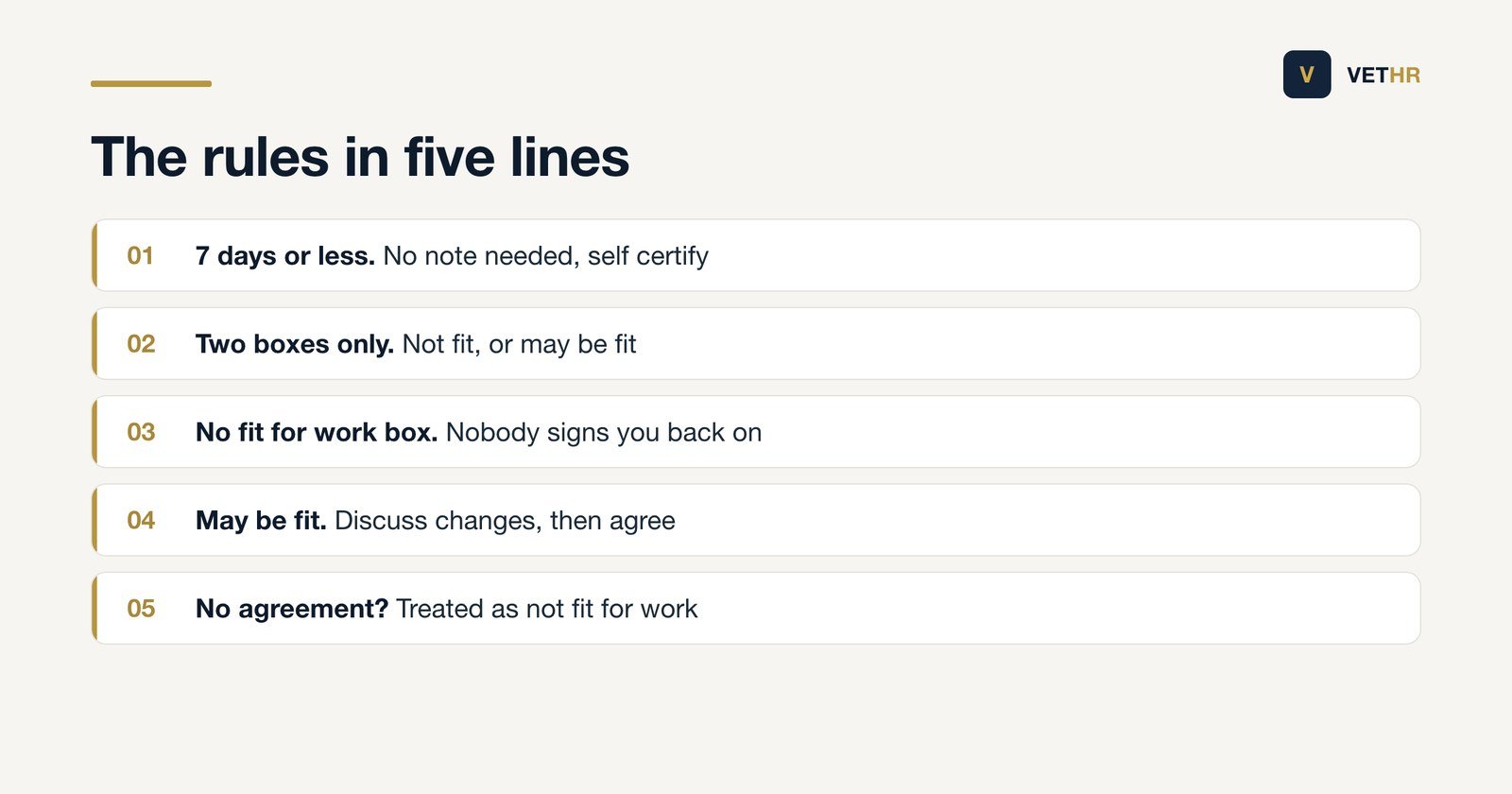
There are only two options. The fit note states that the employee is either not fit for work, or may be fit for work.
There is no box for fit for work. A healthcare professional does not sign people back; the absence ends when the note expires or when the practice and the employee agree a return.
That single fact resolves most of the confusion in practice. Nobody needs to be signed off sick by a doctor to stay off, and nobody needs to be signed back on to return.
This is the one that catches people out, and it carries a specific instruction. GOV.UK says that where a fit note states the employee may be fit for work, employers should discuss any changes that might help the employee return, for example different hours or tasks, and that the employee must be treated as not fit for work if there is no agreement on those changes.
So it is a conversation, not a decision that has been made for you. And if that conversation does not produce an agreement, the outcome is that the person stays off.
In a veterinary practice the useful adjustments are fairly predictable. Reception or admin instead of theatre. No restraint, no lifting, no out of hours. Shorter shifts. A phased build up over three or four weeks. Consults without the ops list.
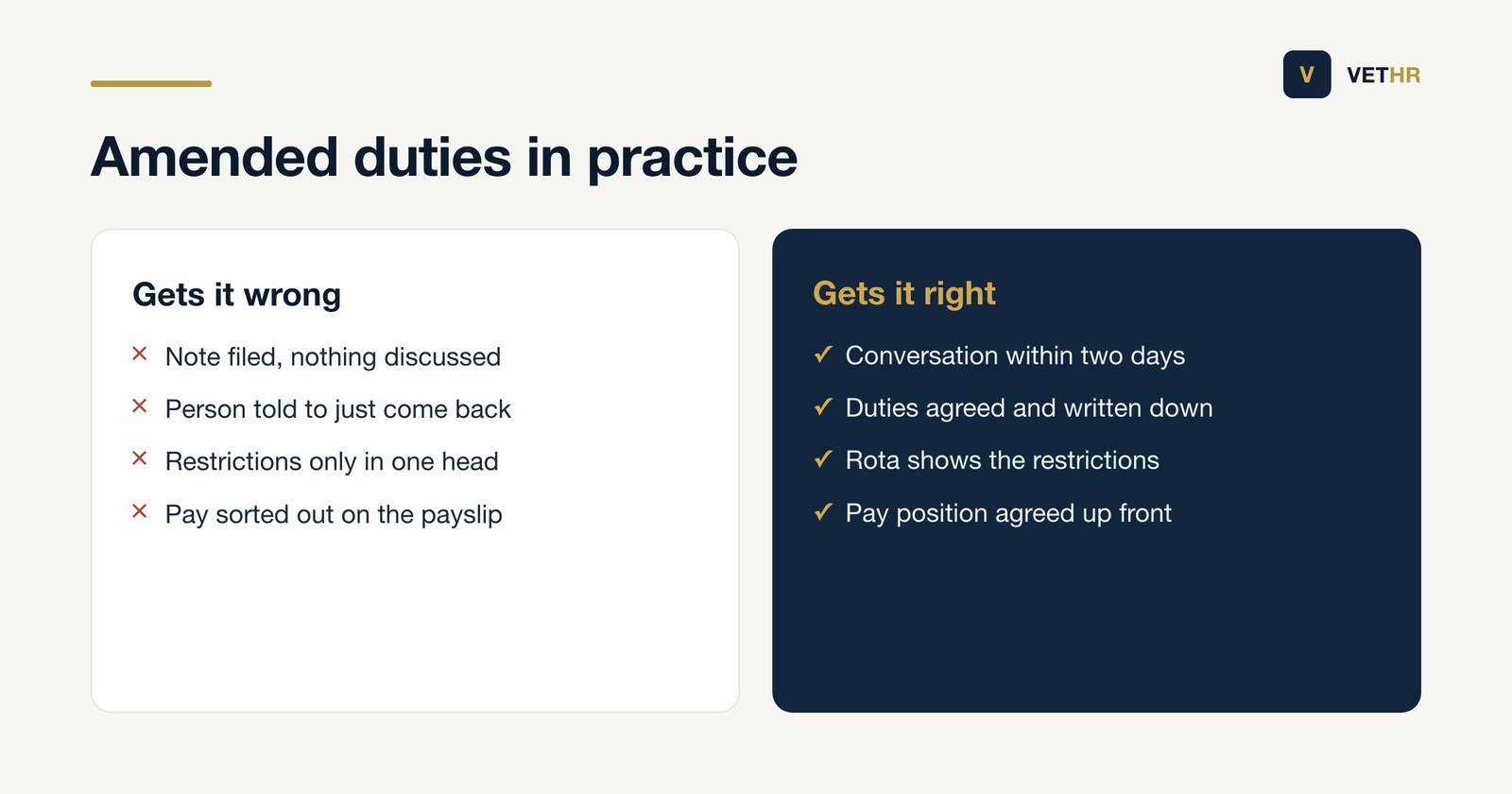
Write down what you agreed, with an end date and a review. Our guide to return to work interviews in a veterinary practice covers the conversation itself.
Check the practical detail before you agree anything. No lifting is easy to say and hard to honour in a building where a collapsed dog can arrive at any moment, so decide in advance who covers that and make sure the person on restricted duties is not the only one in the room when it happens.
Set the review date at three or four weeks rather than waiting for the restriction to expire. A short conversation part way through usually shows whether the adjustment is working or quietly being ignored because the practice got busy.
The fit note evidences the absence; it does not set the pay. Statutory sick pay is £123.25 a week or 80% of average weekly earnings, whichever is lower, and is paid for up to 28 weeks.
Whether your practice pays more than that is a contractual question. If you operate enhanced sick pay, say clearly in the contract how long it runs and whether it is discretionary.
A partial return on amended duties is normally paid as normal working, not as sick pay, unless the hours are reduced. Agree the pay position at the same time as the duties, because discovering it on a payslip is how a good return goes wrong. Our note on statutory sick pay for veterinary staff has the detail.
A fit note is health information, which is special category data. It belongs in a confidential health file, not in the rota folder and not in a group chat.
The rota needs one line: this person is off until this date, or is on amended duties with these restrictions. That is all a shift leader needs, and it is all they should have.
Our notes on GDPR and staff records and the staff privacy notice cover where health information sits and who is entitled to see it.
Keep a simple log of dates rather than a pile of paper. Absence start, the period each note covers, the date of each conversation and what was agreed. That timeline answers almost every question that comes up later, and it takes a minute to maintain.
A run of fit notes is a different situation from a single one, and it needs a plan rather than a filing system.
Keep in contact at an agreed frequency, consider an occupational health referral, and think about whether the condition amounts to a disability, because that brings a duty to make reasonable adjustments.
Our guides to long term sickness, occupational health and reasonable adjustments in a veterinary practice cover the route through.
If your absence policy still asks for a doctor’s note from day one, book a free 30-minute HR health check and we will bring it up to date.
GOV.UK is clear that for absences of 7 days or less, employees do not need to give their employer a fit note or other proof of sickness. Use self certification instead, and keep the form short.
No. A fit note can be issued by a GP or hospital doctor, a registered nurse, an occupational therapist, a pharmacist or a physiotherapist. A note from any of those is valid and should be treated the same way.
Then the employee must be treated as not fit for work. GOV.UK says so directly. Record what you considered and why it was not possible, because that record matters if the absence becomes a longer term issue.
Yes. A fit note is advice, not a prohibition, and nobody needs signing back on. If the person feels able to return and you are satisfied it is safe, agree it, record it, and adjust duties if needed.
A healthcare professional can issue a fit note covering a past period after an assessment. Treat it as evidence of the absence rather than something to challenge, and raise any genuine concerns through your absence procedure instead.
The nurse with the amended duties note is not staying off and is not simply back. She has a fit note that asks the practice to have a conversation, and the outcome depends on whether you can agree the changes.
Agree them where you can, write them down with a review date, and keep the note itself out of the rota folder. We rewrite absence policies for independent practices through HR consultancy for veterinary practices and ongoing HR support on subscription.
The Vet HR Team provides HR consultancy and white-labelled staff systems exclusively to UK veterinary practices.
Contracts, rotas, holiday, a difficult conversation. Tell us what you are dealing with and we will come back within one working day. Nothing to sign up to.
Got it. We will come back to you within one working day. If you do not see a reply, please check your spam folder.
