Last updated: 5 September 2026
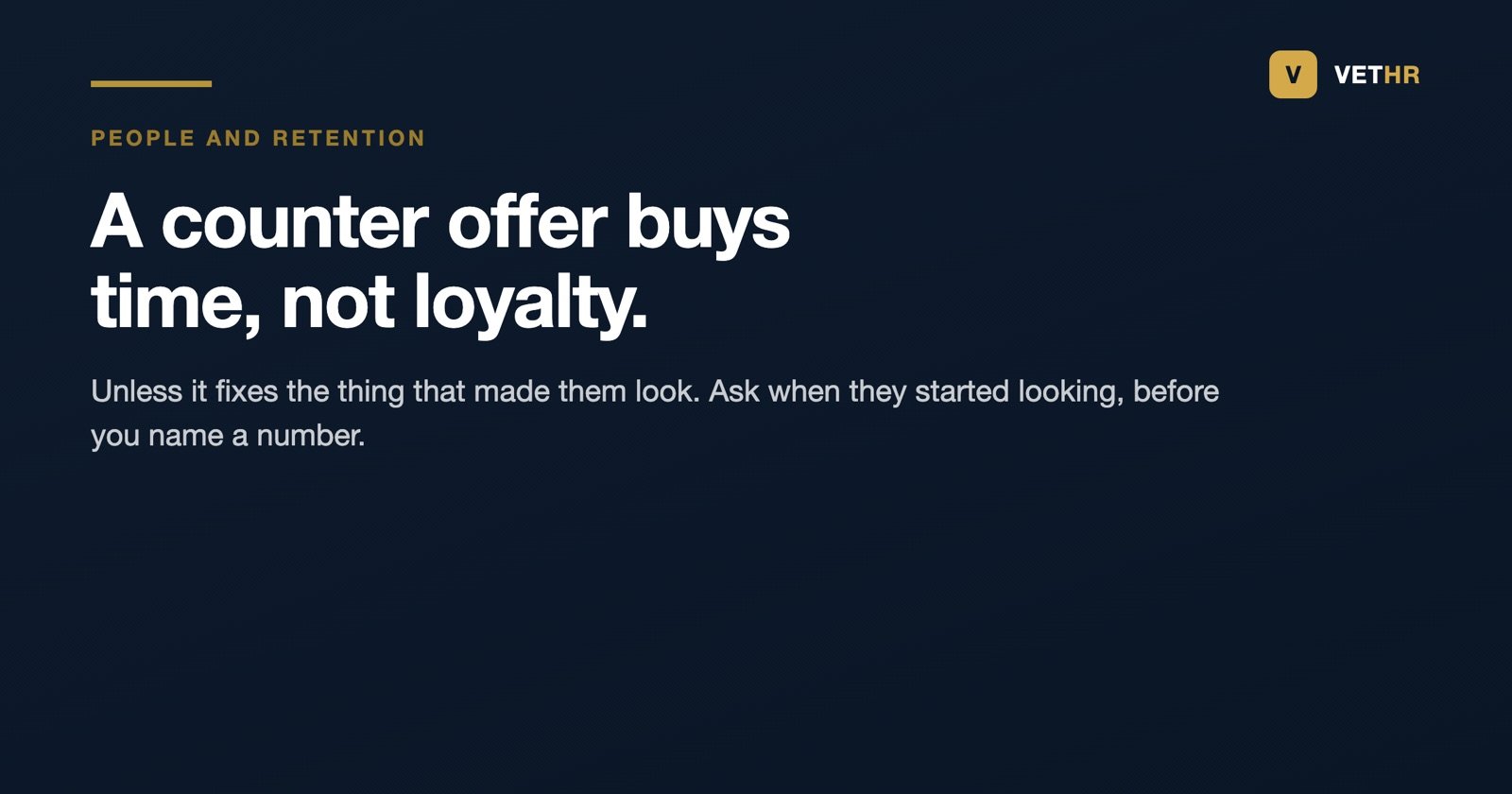
TL;DR: A counter offer buys time, not loyalty, unless it fixes the thing that made the person look. Pay is rarely the real reason and is almost always the reason given. Before you name a number, find out when they started looking and why, then decide whether you can change that. If you cannot, the money will not hold them.
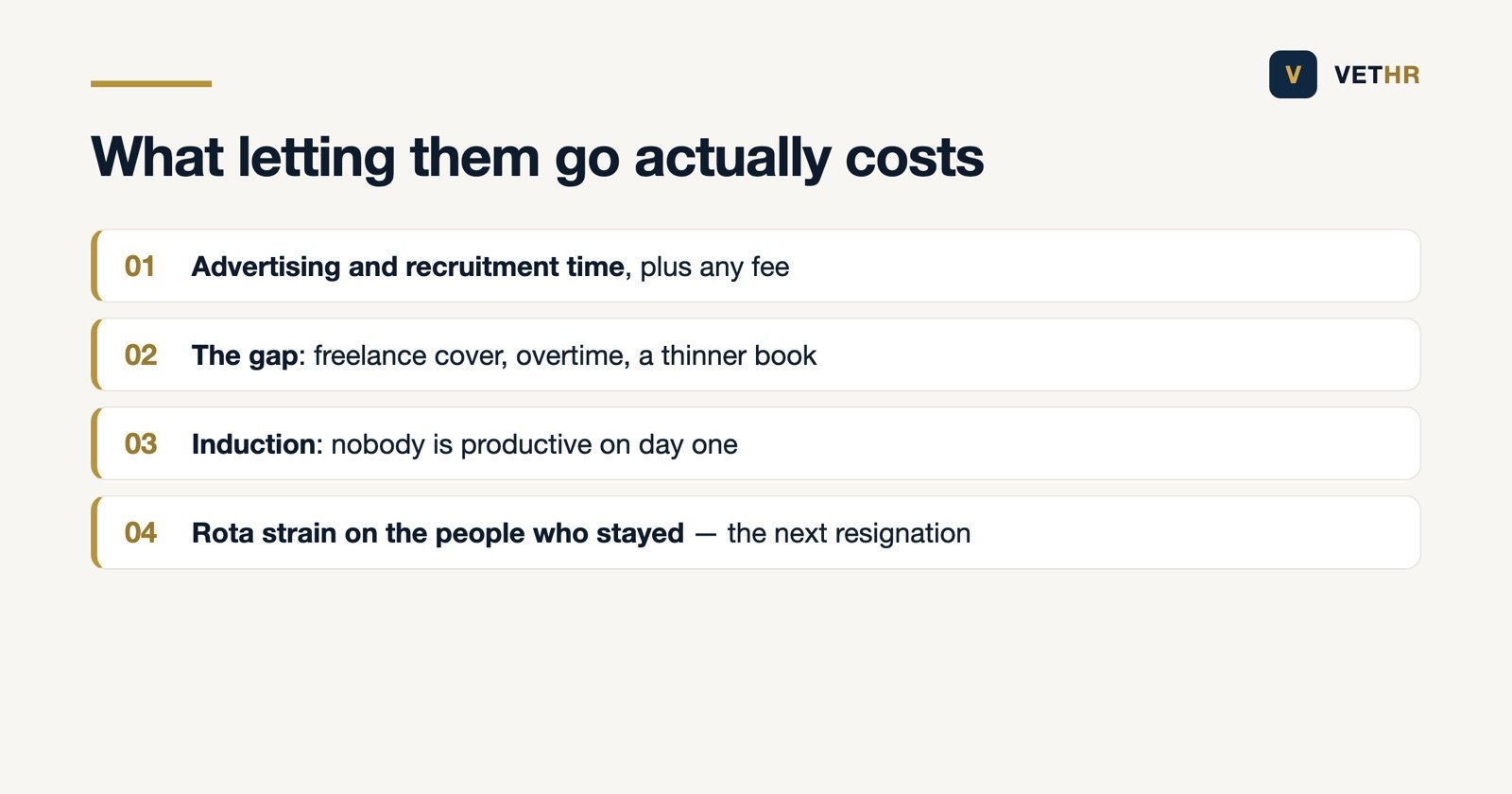
Because the alternative is genuinely awful. Recruiting a vet or an RVN is slow and uncertain, freelance cover in the gap is expensive, and the rota strain lands on the people who stayed. Against that, a few thousand pounds looks cheap and instant.
It often is cheap and instant. It is just frequently temporary, and the reason is straightforward: money is what people say, and rarely what they mean.
That somebody decided to leave, updated a CV, applied, prepared for an interview, attended one during a working week, and accepted an offer. That is months of effort by a person who is already busy.
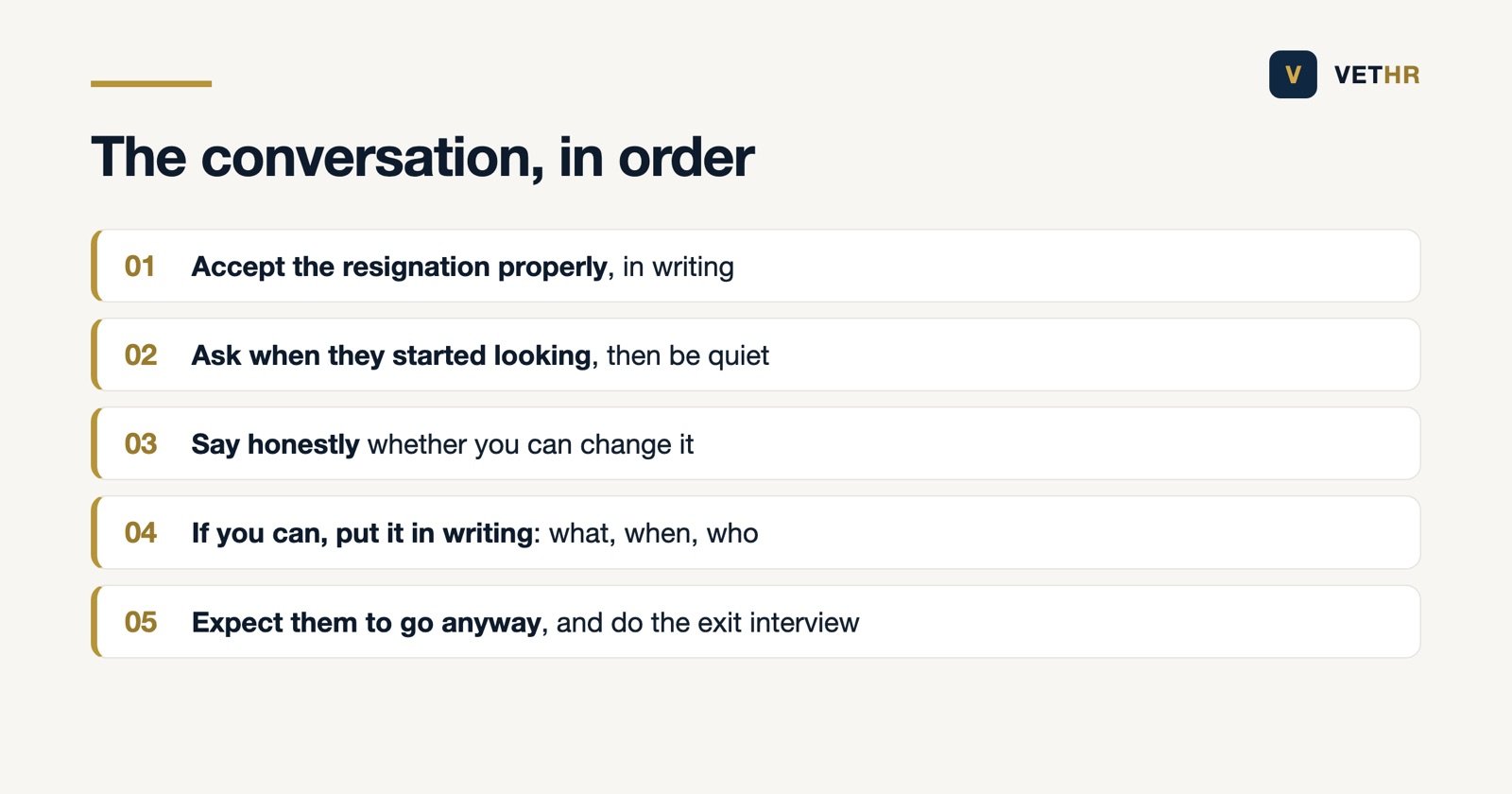
Nobody does all that over a salary they could have asked you to review. They do it because something made staying feel worse than the effort of leaving. The counter offer question is therefore not “what will it take to keep you”, it is “what made you start looking”.
Ask that question before any counter offer is discussed. If you name a figure early, the conversation becomes a negotiation and you will never hear the real answer.
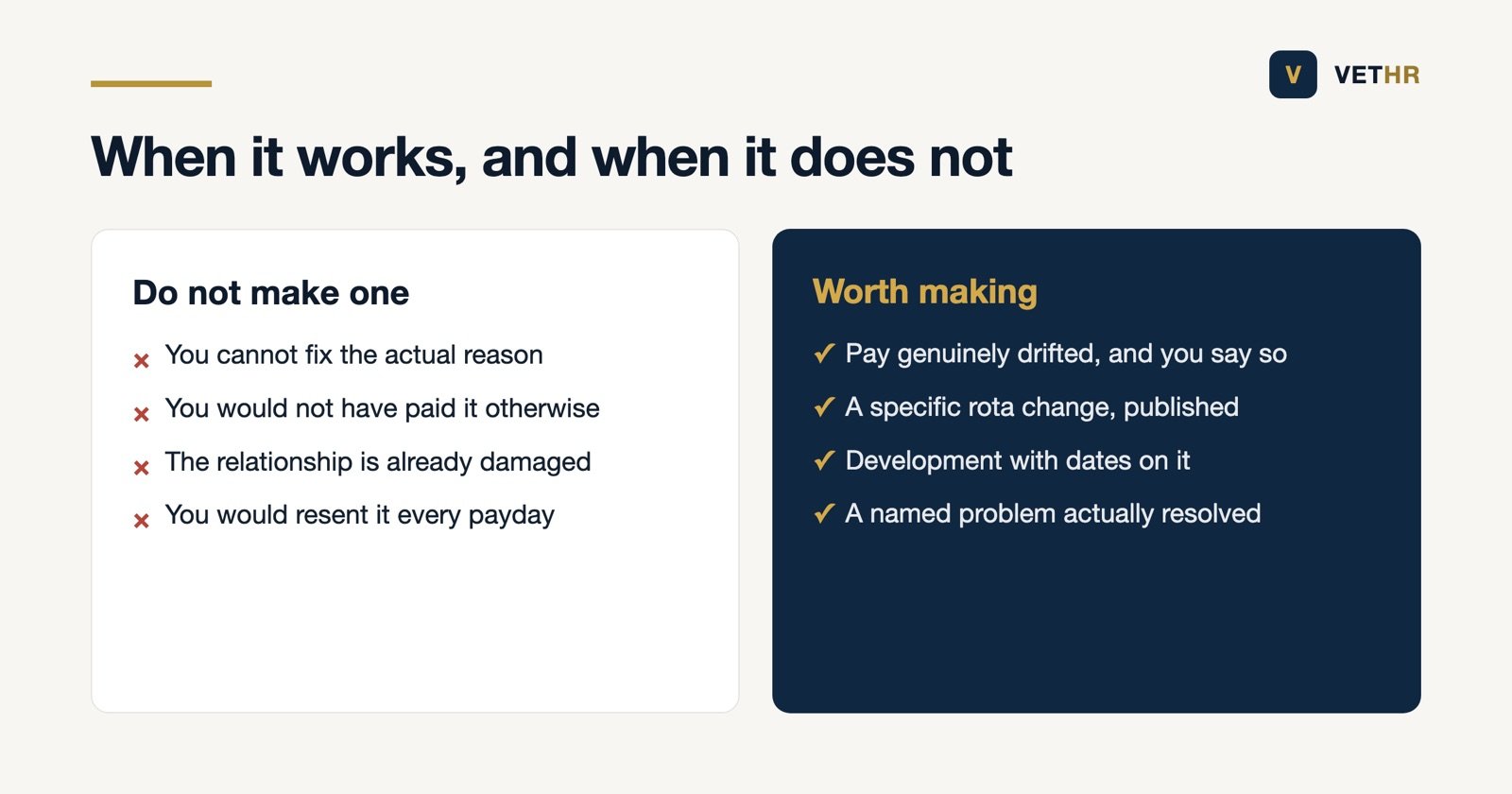
There are situations where it genuinely works, and they have something in common: the reason is fixable and the fix is real.
In each case the money, if any, is the smaller half. The larger half is a change the person can see.
The last one is underrated. A counter offer made grudgingly damages the relationship it was meant to repair.
Do this arithmetic honestly, because a counter offer is usually justified by a number nobody has actually worked out.
Put a real figure on that and the money often looks cheap. That is a fair conclusion. The trap is stopping there, because an offer that does not fix the reason buys a few months of the same cost, deferred.
When a counter offer holds, it tends to look like this. The pay correction is modest and framed as overdue rather than as a bribe. Something structural changes on the rota within the month, visibly. There is a development commitment with a date on it. And there is a conversation booked six weeks later to check whether it actually feels different.
That last point does most of the work and costs nothing. The failure pattern is that everything changes for a fortnight, drifts back, and the person leaves in March instead of November having lost trust as well.
Put whatever you agree in writing, including the parts that are not about money. A verbal promise about the rota, made in an emotional conversation, is remembered differently by both people within a month. Acas guidance on changing an employment contract is worth a look where the change is contractual.
This is the part practices work out too late. A counter offer is not a private arrangement. In a practice of fourteen people it is known within a fortnight, whatever anybody promised.
So ask the second question before you make one: what does this do to everybody else? If the RVN who threatened to leave is now paid more than the RVN who stayed and never complained, you have created a problem that is bigger than the one you solved. Sometimes the honest answer is to correct several salaries at once, or none.
If you have no pay structure to test that against, that is the real finding, and our guide to the annual salary review is the better place to start than a counter offer made under pressure.
Our free leaver pack has the resignation acknowledgement and the exit interview form that goes with this conversation.
Ask the question a year earlier. Everything above is an emergency version of a conversation that costs twenty minutes a month if you have it routinely.
A practice running proper one to one meetings hears “the rota is grinding me down” in month two, when it is a rota problem. The same practice without them hears it as a resignation in month fourteen, when it is a recruitment problem and a counter offer is the only lever left.
Only by agreement. Once notice is given and accepted, both sides are generally bound unless you both agree to treat it as withdrawn. If you do, confirm in writing that employment continues unbroken on the existing terms plus whatever has changed.
Do not take it at face value on the day. Where a resignation is given in temper or distress, give it a short cooling off period and check what was meant before acting on it. Treating an angry outburst as a formal resignation is a well known route to a claim.
Do not announce it, and do not assume it stays private either. Plan for it being known, which mostly means being able to justify it on the same basis you would justify any other pay decision.
No, unless you agree that it does. If the resignation is withdrawn by agreement, employment simply continues, and continuity of service is unbroken.
Then the pay structure is the problem, not the person. A practice with a transparent, annual review process has an answer to that conversation. A practice without one has only the counter offer, every time.
Sometimes the right answer is to make the counter offer, mean it, and fix the underlying thing. Often the right answer is to accept the resignation gracefully, run a proper exit conversation, and use what you learn so the next person does not reach the same point.
What is never right is naming a number before you have asked when they started looking. If you want help working out whether the reason is fixable, our free HR health check covers pay, rota and retention, and you keep the written summary either way. Acas has general guidance on resignation.
Contracts, rotas, holiday, a difficult conversation. Tell us what you are dealing with and we will come back within one working day. Nothing to sign up to.
Got it. We will come back to you within one working day. If you do not see a reply, please check your spam folder.
