Last updated: 5 September 2026
TL;DR: Long term sickness is not a longer version of a day off. It needs agreed contact, medical evidence, a genuine look at adjustments, and a written record of each. Practices go wrong by leaving someone alone for three months and then sending a letter about capability. Do the process properly and most long term absences end in a return rather than an exit.
There is no statutory definition of long term sickness. Most employers treat four weeks of continuous absence as the point where the ordinary sickness process stops being the right tool, and that is a sensible line for a practice.
What changes at that point is not the sympathy, it is the structure. Short absences need a return to work conversation. Long term sickness needs a case: a file, a rhythm of contact, medical evidence, and a record of what was considered and why.
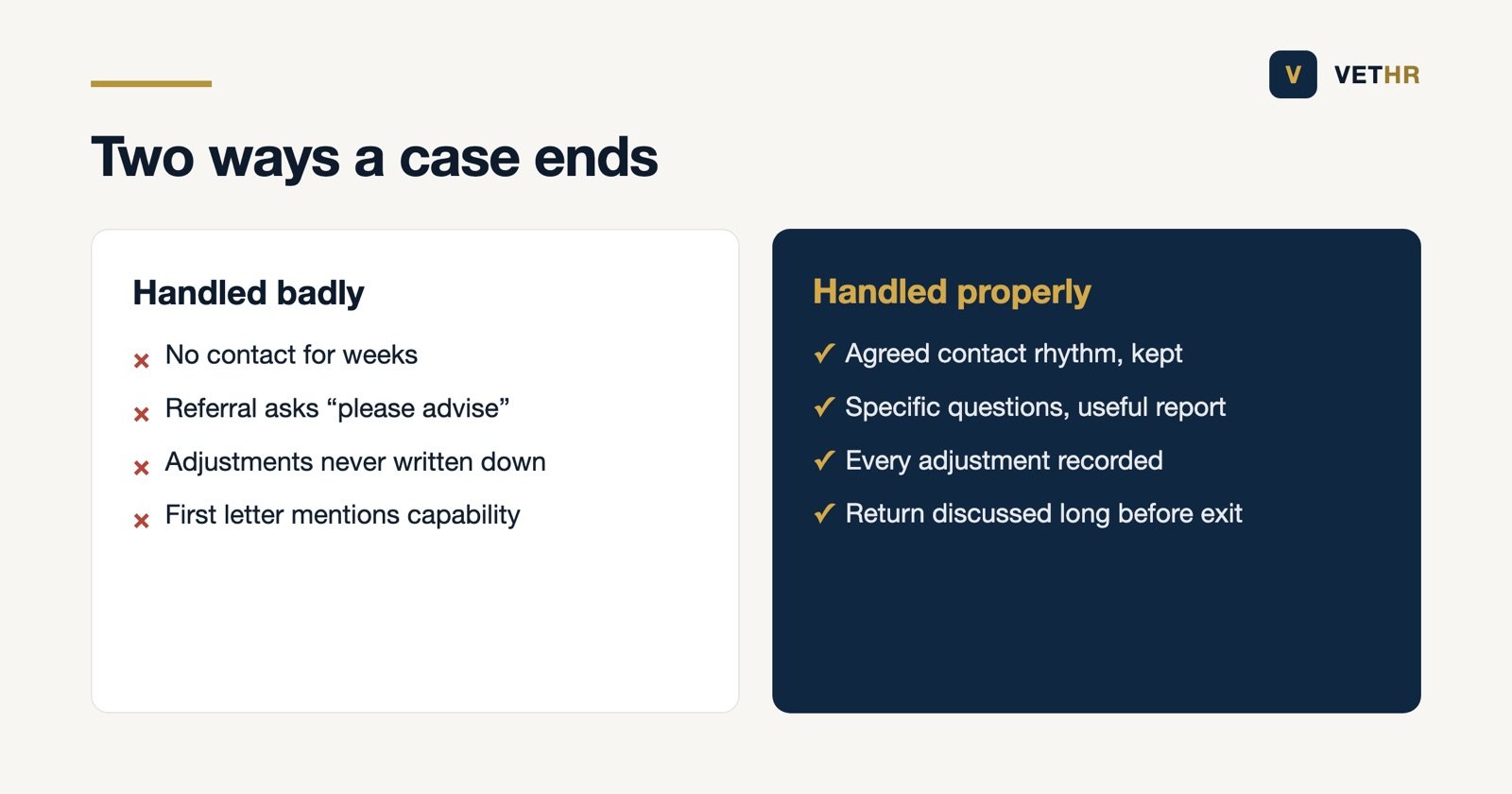
Going quiet. Long term sickness makes people awkward, and it is nearly always kindly meant. Nobody wants to hassle someone who is unwell, so the practice leaves them alone, and weeks pass with no contact at all.
Then sick pay runs out, or the rota strain becomes unsustainable, and the first contact in two months is a letter that mentions capability. From the employee’s side that is not kindness followed by process. It is silence followed by a threat, and it is the single most common reason a long term sickness case ends in a claim the practice would otherwise have won.
Keeping in touch during long term sickness is not harassment. Agree the frequency and the method at the first review, write it down, and then do exactly that.
Our free sickness absence pack includes a long term absence review form that runs steps four to six.
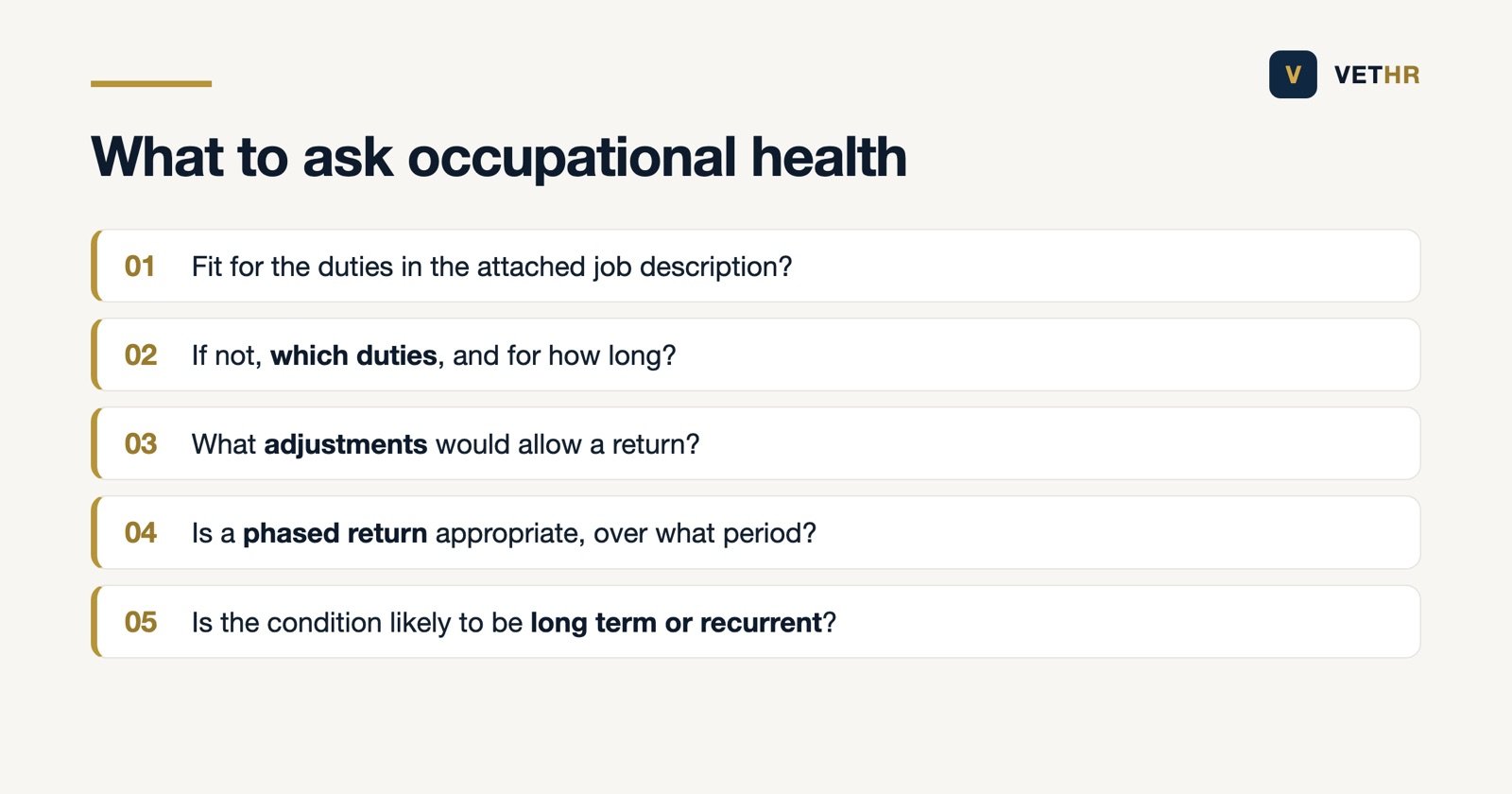
A referral that asks “please advise on this employee” produces a report that says very little and costs the same as a useful one. Ask closed, practical questions.
Send the job description with the referral. An occupational health adviser who does not know the person lifts sedated dogs, drives to yards alone and does nights cannot tell you anything useful about fitness for that work.
The duty to make reasonable adjustments applies where the condition amounts to a disability, and it is worth assuming it might rather than deciding it does not. Reasonable is judged on what is practicable for a business of your size, not on what is convenient.
Where an adjustment is not reasonable, say so in writing with the reason, rather than letting the request quietly disappear. A documented no is defensible. Silence is not.
Money is the thing people worry about most during long term sickness and the thing employers most often avoid discussing. Avoiding it does not spare anyone. It just means the person finds out when the payslip changes.
Set it out in writing at the first review: what statutory sick pay is worth and how long it runs, what any contractual sick pay adds on top and when it stops, and the date each of those changes. Statutory sick pay is payable for up to 28 weeks, and since 6 April 2026 it starts from the first qualifying day and no longer depends on earning above a lower earnings limit. Gov.uk sets out the current position on statutory sick pay.
Two practical points follow. Someone who knows their sick pay ends in six weeks can plan, and often engages with a phased return sooner. And a practice that has explained the position in writing is in a much stronger place if the long term sickness case later becomes contentious.
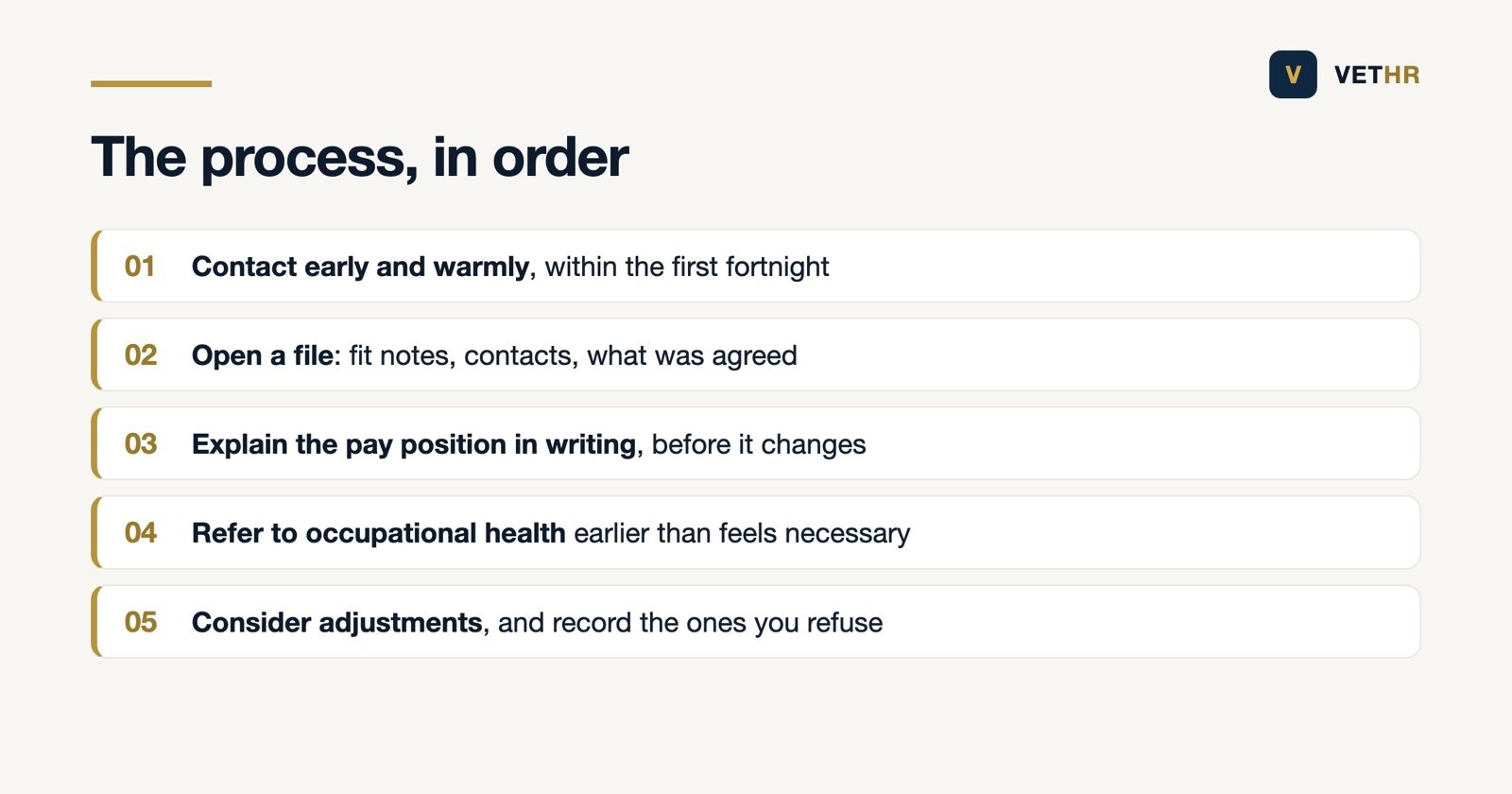
If someone else picked up the file tomorrow, they should be able to see the whole story without asking anyone. That means, for each long term sickness case:
That list is not bureaucracy for its own sake. It is the difference between a defensible decision and an argument about what everyone remembers.
Long term sickness in a small practice lands on the people who are still there, and pretending otherwise helps nobody. If one RVN is off for three months, somebody is covering it, and that somebody is usually the most obliging person on the team.
Two things follow. Plan the cover deliberately, with freelance cover or agreed overtime, rather than letting it be absorbed. And watch the people absorbing it, because a long term absence handled well for the absent person and badly for everyone else frequently produces a second resignation.
Never let the strain on the team become a reason to shortcut a long term sickness process. It is a reason to resource the cover.
Dismissal on grounds of ill health capability at the end of long term sickness can be fair, but the absence itself is never the justification on its own. A tribunal looks at whether the employer consulted properly, obtained and considered medical evidence, considered adjustments and alternative roles, and followed a fair procedure.
Two things have changed the risk profile here. From 1 January 2027 the unfair dismissal qualifying period falls to six months, so this exposure arrives far earlier in an employment relationship than it used to. And where the condition is a disability, dismissal carries discrimination risk on top, with no service requirement at all.
This is the point to take advice, not to reach for a template. Acas sets out the general position on absence from work.
Agree it with them at the first review rather than deciding unilaterally. Monthly contact with a formal review, plus informal contact if they want it, suits most cases. Write down what you agreed and stick to it.
During long term sickness you can require reasonable evidence of continued incapacity, and a fit note is the usual form. Be proportionate. Demanding weekly evidence from someone with a documented long term condition reads as pressure rather than process.
Yes. Statutory annual leave accrues during sickness absence, and where someone could not take it because of illness there are circumstances in which it must be allowed to carry over. Since 6 April 2026 you must also be able to evidence all of this, because annual leave records must be kept for six years.
Keep trying, in writing, and record each attempt. Explain what will happen if you cannot obtain medical evidence, and give a reasonable deadline. A decision made on the information available can be fair, but only where you can show you genuinely tried to obtain more.
Cover the work, do not replace the person, unless and until the employment has properly ended. Recruiting a permanent replacement while someone is still employed and absent is difficult to defend and tends to become the central fact in any later claim.
Most long term sickness cases handled properly end in someone coming back, often better and more loyal than before. Most handled badly end in a resignation, a claim, or both, and the difference is rarely the medical facts. It is whether anybody kept in touch and wrote things down.
If you have a case running now, our free HR health check covers it, and you keep the written summary either way.
Contracts, rotas, holiday, a difficult conversation. Tell us what you are dealing with and we will come back within one working day. Nothing to sign up to.
Got it. We will come back to you within one working day. If you do not see a reply, please check your spam folder.
