Last updated: 5 September 2026
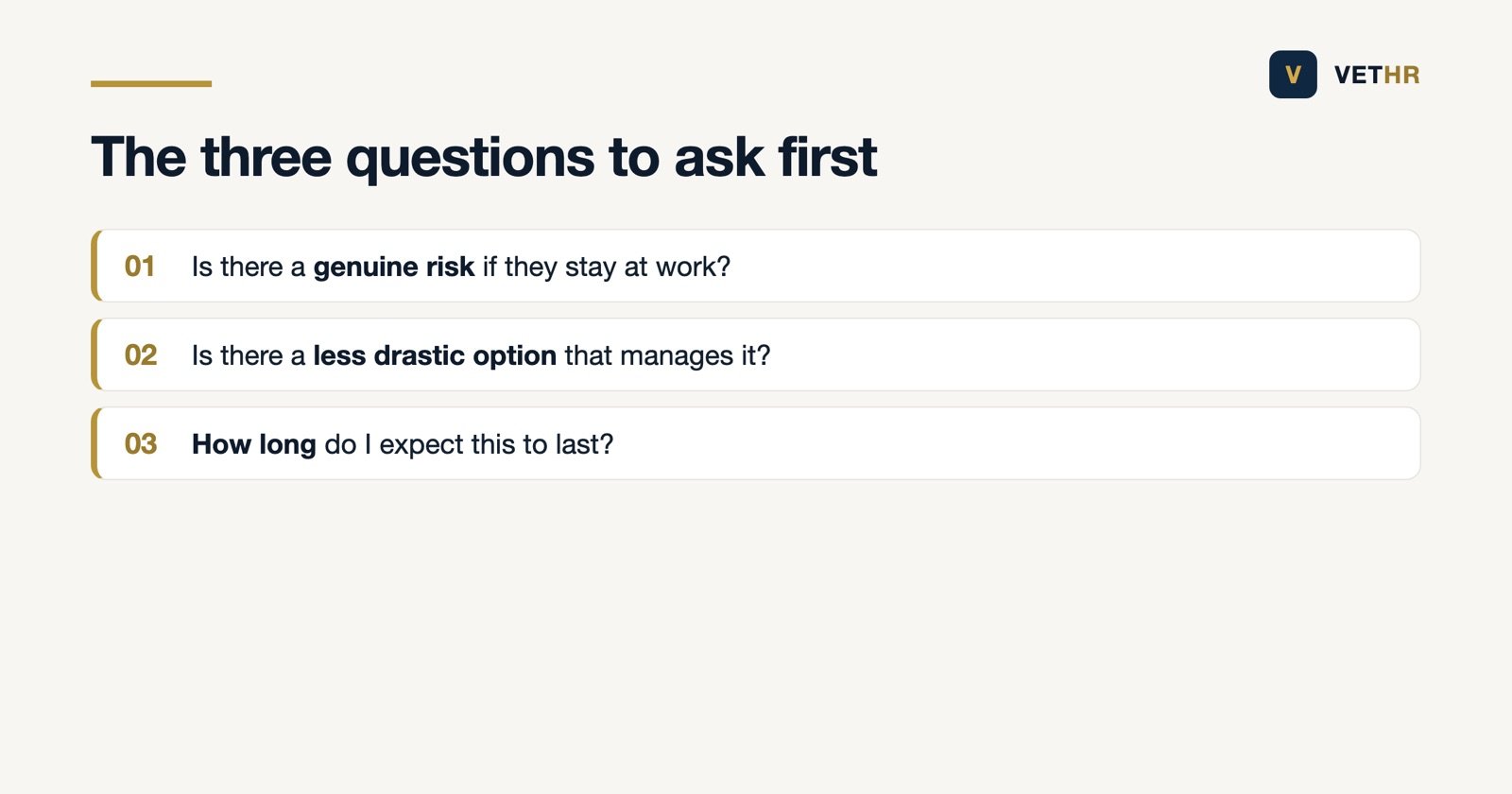
TL;DR: Suspension is not a neutral act and it is not a punishment. Before suspending an employee, ask whether there is a genuine risk in them staying at work, whether a less drastic option manages that risk, and how long you expect it to last. Suspending by reflex, or leaving someone suspended open-endedly, is how a manageable problem becomes a constructive dismissal claim.
Almost every practice that suspends somebody says the same sentence: this is not a disciplinary sanction, it is neutral. The first half is right. The second half is not.
Suspension from a small practice is not neutral in any sense that matters. Everyone notices within an hour. Clients ask. The person sits at home for weeks assuming the worst. Courts have recognised it is not a neutral act, and that acting as a knee jerk response, without genuinely considering whether it is necessary, can breach the implied term of trust and confidence.
None of that means never suspend. It means suspending an employee is a decision that has to be made deliberately and recorded, not a default setting for “something serious has happened”.
Write the answers down before you act on a suspension. If the matter is ever tested, the note you made on the day is worth more than the explanation you construct afterwards.
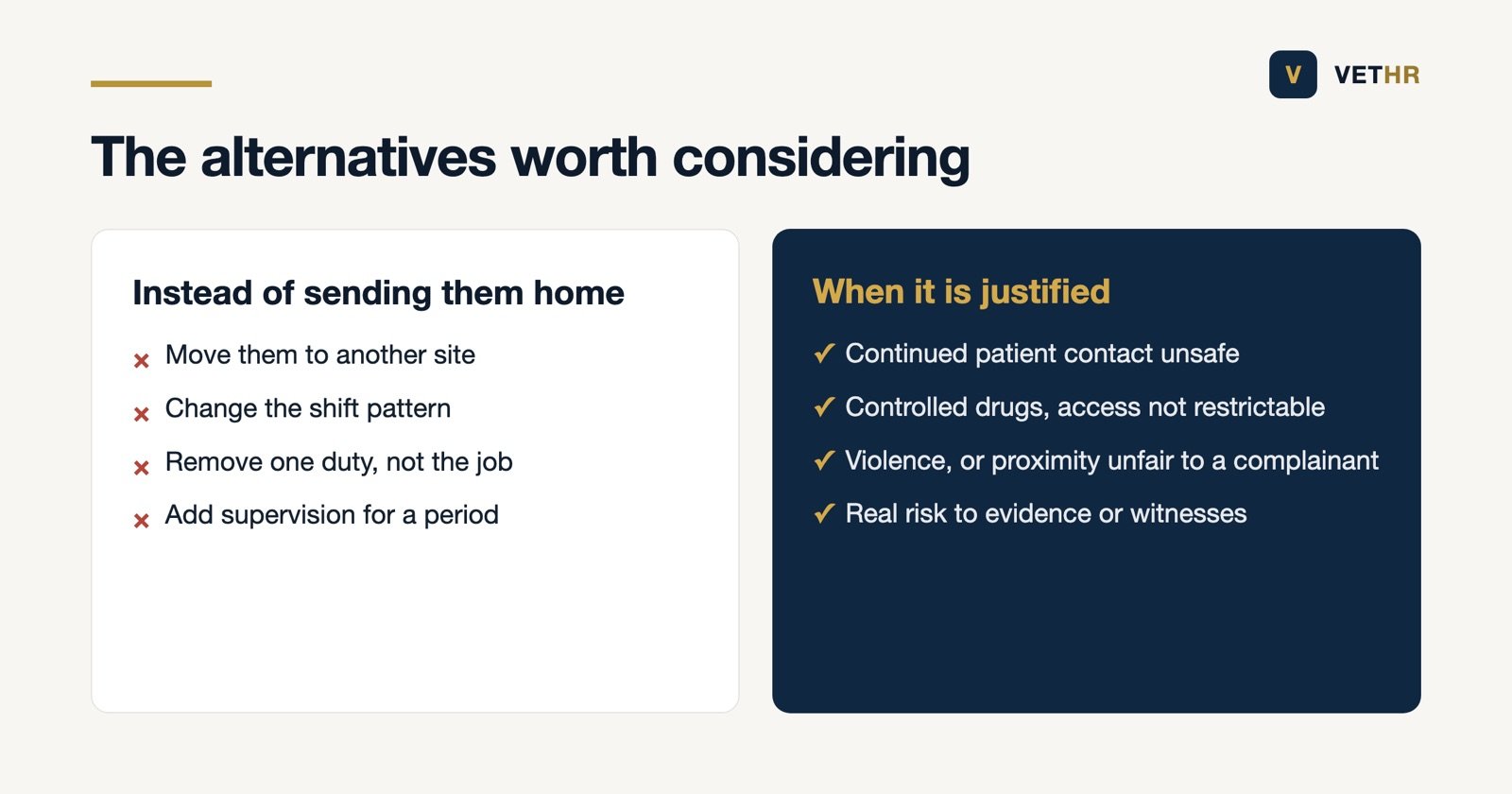
Before any suspension, note that a veterinary practice usually has more options than people realise, and several of them manage the risk without the damage.
If you consider one of these and reject it, record why. “Considered and rejected because” is a far stronger position than a file that shows suspension was the only option ever contemplated.
There are situations where suspension is the right call and the alternatives genuinely do not work.
Even then it is precautionary and temporary, and should end the moment the reason for it does.
Tell them in private, briefly, and confirm it in writing the same day. Say what is being investigated in factual terms, that no decision has been made, that this is precautionary and not a sanction, that they remain on full pay, and roughly how long you expect it to take.
Cover the practical points: whether to attend the practice, contact with colleagues and clients, returning keys and a practice phone, and who they should contact with questions. Gov.uk sets out the basics of disciplinary procedures at work. Make clear they may still contact a companion or trade union representative, because a blanket “do not speak to anyone from work” is both unfair and unenforceable.
Then think about the walk out. Being escorted through a waiting room is remembered long after the outcome is forgotten, and a practice that handles that moment with some dignity keeps a relationship it can repair. Our free investigation and suspension pack has the letter.
Less than you want to, and more than nothing. It is visible whatever you say. Silence produces speculation that is invariably worse than the truth, and detail breaches confidentiality and prejudices the process.
A workable form of words: “[Name] is not at work at the moment while we look into something. It would not be fair to them or to anyone else for me to say more. Please do not speculate, and if anyone asks you, say the same.” Then say the same thing every time you are asked.
Decide the client line too, before somebody at reception has to improvise one.
It is worth being concrete, because this is usually chosen as the safe option and it is not free.
None of that argues against it where it is genuinely necessary. It argues against reaching for it when a shift change would have done.
Practices plan the departure carefully and the return not at all, which wastes whatever care went into the first part.
Have a conversation before the first shift back, not on it. Tell them exactly what the team was told, so they are not walking into a room wondering. Agree what, if anything, they want said now. Check the rota puts them somewhere reasonable for the first few days rather than straight onto a sole charge weekend. And if the suspension arose from a conflict with a colleague, do not simply put them back on the same shift and hope.
Where the outcome cleared them, say so to the team in some form, with the person’s agreement. A quiet return after a visible departure leaves the speculation intact.
This is the part that goes wrong most often. It gets started carefully and then simply continues, because the investigation is slow and nobody revisits the decision.
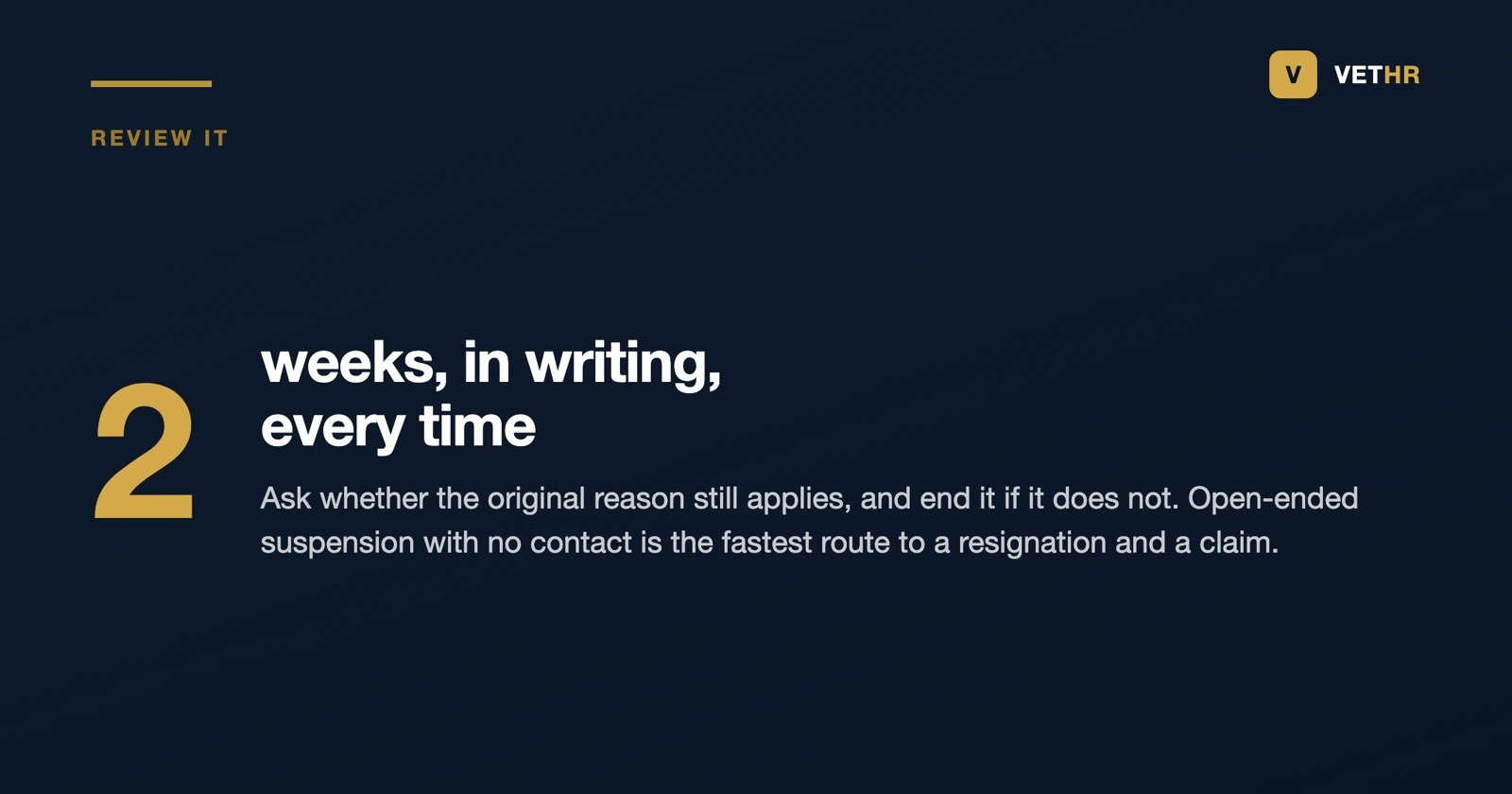
Review the suspension in writing at least every two weeks. Ask whether the original reason still applies, and end it if it does not. If the investigation is going to take longer than you said, write and say so with a new date. Open-ended suspension with no communication is one of the fastest routes to a resignation and a claim, and by then the underlying matter is irrelevant.
Pay continues in full, including the elements someone would ordinarily have earned. Stopping pay, or dropping the out of hours element without thought, converts a procedural issue into an unlawful deduction.
Yes, in nearly all cases. Pay continues in full unless the contract expressly provides otherwise, which is rare and rarely enforceable. Include contractual elements they would normally have received.
There is no fixed limit on a suspension, but the test is whether it remains necessary, and that has to be actively reviewed. Weeks of open-ended suspension with no contact is where practices get into difficulty.
Suspension is occasionally right where the parties genuinely cannot be at work together, but consider separating them by shift or site first. Suspending the person complained about, before anything is established, needs particular care.
No. Agree a neutral line, such as saying they are not available at the moment, and make sure reception has it. Saying anything about an internal process to a client risks defamation and a serious data protection problem.
End the suspension immediately, confirm it in writing, and plan the return properly. Someone coming back after weeks away needs a conversation about what the team was told and what happens next. Handled badly, people who are cleared still leave.
It is a tool with a narrow proper use and a wide informal one. Practices reach for it because it feels safe and decisive, and it is neither. It is disruptive to the rota, distressing to the person, visible to clients and legally consequential.
Ask the three questions, write down the answers, and take advice before any suspension if there is any doubt. Our free HR health check covers it, and see also our guide to running a workplace investigation. Acas has general guidance on suspension during an investigation.
Contracts, rotas, holiday, a difficult conversation. Tell us what you are dealing with and we will come back within one working day. Nothing to sign up to.
Got it. We will come back to you within one working day. If you do not see a reply, please check your spam folder.
